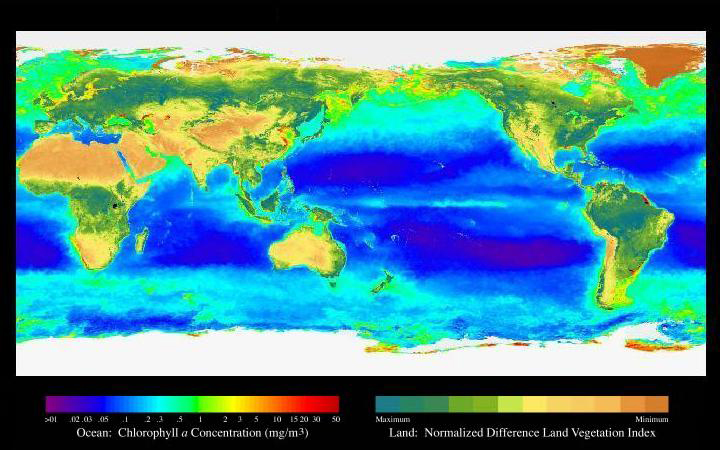
Life requires energy. Biological organization—the culmination of life in all its forms—is determined largely by the flow and transformation of energy. Three distinct types of energy affect biological systems: solar radiation (in the form of photons), thermal kinetic energy (as indexed by temperature), and chemical potential energy stored in reduced carbon compounds (i.e. food). Genomic, phenotypic, and taxonomic diversity and complexity are correlated with variation in energy availability in space and time.
My research focuses on how energy variation, both temporal and spatial, drives diversity, novelty, and complexity in marine invertebrates. Energy, in the form of temperature and food, is intrinsically linked to climate, so my research also addresses how marine invertebrates will respond to climate change. My approach relies upon using a variety of methodologies, including theoretical, field, and synthetic database work. I strive to link these by building ecological and evolutionary quantitative models to both predict biological processes and create null expectations.
The core of my research focuses on marine invertebrates and the bulk of my work is on deep-sea systems, at depths below 200 meters. Globally, temperatures on the seafloor vary between -1 – 4˚ C. Deep-sea organisms acquire chemical energy from falling particulate organic carbon (POC) derived from primary production in the euphotic (1-200 meters) zone, which represents a minimal amount (~1%) of surface production. Given this severe energy constraint, the deep sea provides an exceptionally good system to explore how fluctuations/limitations in energetics impact species, populations, communities, and ecosystems.
Research Highlights
Functional and Morphological Diversity: Defining the Species-Energy Niche
- In my dissertation work, I demonstrated that lowered energy availability may disallow species with energetically expensive forms or body plans (McClain et al. 2004 Evolution). In gastropods, species with elaborate shells and the presence of ornamentation were often absent at lower food levels. Instead these low chemical energy systems favored gastropod shells that were globular, presumably because of the energetic expense of producing more elaborate forms.
- The food limitation experienced by insular terrestrial vertebrates and deep-sea invertebrates may drive multiple and seemingly opposite patterns of body size in these two seemingly different systems (McClain et al. 2006, J Biogeograph). Large organisms potentially evolve toward smaller sizes because of the high energetic costs of being big. Conversely, small organisms potentially evolve larger sizes in the deep sea because of the associated advantages of increased foraging areas and starvation resistance. My current work, in conjunction with collaborators, assembles an island database including a suite of species adaptations and island environmental factors to test for the importance of energetics in determining body size of island mammals (McClain et al. 2013 Biology Letters).
- Without ample energy resources many reproductive strategies would simply fail. However, many organisms have adapted to life under extreme energy limitation. Among marine gastropod families, I found that the dispersal ability of species increases with decreasing food availability. Specifically, the odds of finding dispersing eggs and larvae decrease respectively by 39.5% and 46% with a one gram increase in carbon availability. Under low resources, increased dispersal of offspring may be favored as a form of bet-hedging, increasing the chances that some individuals in early life stages will find productive habitats. Simultaneous hermaphroditism increases with carbon flux, a result that is counter to the prediction that low resource availability might select for strategies increasing the opportunity to maximize opportunities for mating. Alternatively, the production of both sexes is energetically expensive because it requires continuous production of both male and female gametes, and maybe disfavored in low energy environments. With different reproductive strategies in different energy regimes, gradients in ocean productivity may have been vital in generating the diversity we see in marine mollusks (McClain et al. in press Proc Roy Soc B).
Scaling the Species-Energy Niche to Global Biodiversity
- My work in Proceedings of the Royal Society (McClain and Boyer 2009), demonstrates that species diversity is correlated with size range across metazoan phyla and two vertebrate classes. This implies a link between the evolution of body size variation and the ecological process modified through niche diversity. This work also demonstrates that diversity in some phyla is limited by energetic constraints that set lower and upper limits on body size. In a recent follow up paper in Evolution (McClain et al. 2012), colleagues and I demonstrate that increased energy availability in marine mollusks allowed for greater variation in body size and promotes diversity. This suggests a three-way linkage between body size, diversity, and energy availability. Indeed, my previous work indicates that body size distributions in local marine and terrestrial communities, i.e. the number of species per size class, are mediated by energy availability (McClain 2004 Glob Ecol Biogeograph, McClain & Nekola Ecol Evol Res 2008).
- Spatial variation in chemical energy availability not only shapes the total species in a location but the suite of species in the community, i.e. beta-diversity. From scales of less than few centimeters to thousands of kilometers, my recent work with a range of collaborators (McClain et al. 2011 Mar Ecol Prog Ser, McClain et al. 2012 Proc Roy Soc B) demonstrates a linkage between heterogeneity in energy and species turnover. This work has relied heavily on understanding beta diversity in terms of functional, phylogenetic, and taxonomic turnover among communities and building eco-evolutionary quantitative models of how species and individuals distribute and map onto the landscape. This work has yielded a more comprehensive picture of beta-diversity in the ocean. Overall, these studies illustrate that the deep-sea floor is like your Grandma’s quilt in that it presents a heterogeneous variety of patches. These patches, driven by differences in the flux of carbon to the deep-sea floor, whether occurring over centimeters or kilometers, provide unique habitats that allow a variety of different animals to coexist. Moreover, this work indicates that the evolutionary mapping of species onto a niche axis of food availability has greatly contributed to marine biodiversity.
- One of the most well known marine phenomena is the peak in benthic diversity between 1500-2500 meters, representing an intermediate level of chemical energy (Tittensor et al. 2011 Biol Lett, McClain et al. 2012 PNAS). My work demonstrates that when energy availability is modest, and species diversity is high, species become increasingly more ecologically and morphologically ‘packed’ into the community (McClain et al. 2004 & McClain 2005 Evolution). This packing also differs significantly from random modeled assembly processes (McClain & Etter 2004 Oikos, McClain et al. 2007 Glob Ecol Biogeograph). This contrasts with a scenario in which high species diversity occurs through a greater range of novel ecologies, morphologies, and functional groups. This suggests that intermediate levels of food availability do not afford a broader range of niches; instead, species tend to subdivide them more finely.
- At high levels of energy availability, certain trophic groups and size classes monopolize food resources and can lower total diversity (McClain & Barry 2010 Ecology). For example, in submarine canyons topography creates habitat heterogeneity by, among other means, altering patterns of organic input. Areas of high carbon flux quickly attract larger herbivores and deposit feeders, increasing bioturbation and disturbance, and radically altering the composition and diversity of smaller seafloor fauna. This work addresses the conundrum of why diversity is low at higher productivity and indicates the importance of cascading diversity processes (e.g. productivity, disturbance, competition).
- Under extreme food limitation, communities are often loosely structured with regard to their ecological interactions, and are indistinguishable from randomly assembled, model communities (McClain et al. 2004, Evolution, McClain & Etter 2005, Oikos). For example, both the diversity in morphological types and body size suggest that the abyssal fauna (>4000m) is a random subset of the bathyal communities (<4000m). These findings led Michael Rex, myself, and others to propose a new hypothesis for abyssal biodiversity based on source-sink dynamics in which eutrophic regions can serve as a “source” of species to oligotrophic “sink” habitats 100’s of kilometers distant (Rex et al. 2005 Am Nat).
Relating Energy to Biocomplexity
- In the fossil record, the increases in biological complexity in marine systems, i.e. the Mesozoic Marine Revolution, is posited to reflect an increase in energy availability. Collaborators and I provided the first quantitative test of this idea. We found that the total global energy usage of mollusks, as modeled by metabolism and energetic constraints, increased through the Mesozoic Marine Revolution, reflecting ecological reorganization both in terms of body size distributions and trophic levels (Finnegan et al. 2011 Paleobiology). Likewise, bivalves energetically dominated brachiopods several million years before bivalve diversity exceeded brachiopod diversity (Payne et al. 2013 Proc Roy Soc B).
- With frigid temperatures and virtually no in situ productivity, the deep oceans, Earth’s largest ecosystem, are especially energy-deprived systems. Our knowledge of the effects of this energy limitation on all levels of biological organization is highly incomplete. With collaborators, I used the Metabolic Theory of Ecology to build a quantitative framework for the energetics of the deep-sea ecosystem by examining the relative roles of carbon flux and temperature in influencing metabolic rate, growth rate, lifespan, body size, abundance, biomass, and biodiversity of life on the deep seafloor (McClain et al. 2012 PNAS). We found that the relative impacts of thermal and chemical energy changes across organizational scales. Individual metabolic rates, growth, and turnover proceed as quickly as temperature-influenced biochemical kinetics allow. In contrast, chemical energy limits higher-order community structure and function.
Ongoing and Future Research
- I am continuing my exploration of body size evolution, diversification, and energy flow. With Carl Simpson (Smithsonian), I am seeking to apply novel evolutionary models and analyses to phylogenies and the fossil record of marine invertebrates to understand size evolution. Specifically, we want to examine how size and diversification are evolutionary linked through energetic availability.
- My goal is to move beyond quantification of patterns and begin to test experimentally how factors alter deep-sea diversity. In 2007, I initiated the Local Underpinning of Mass and Biodiversity Energy Relationships (LUMBER) project that uses 36 experimentally placed pieces of wood to explore energy flow in invertebrate systems. Woodfalls in the ocean form distinctive communities comprising species that either gain sole nutrition from wood or rely on predation of the former. By altering wood size, energy flow can be regulated in these experimental communities. In addition, my previous work indicates that guild competition may limit diversity under higher food availability, as a natural follow-up, I currently have a grants submitted to continue the work on these unique deep-sea systems
- I am also developing research to explore the evolution and the ecological energetics of size in sharks, extending my findings for mollusks into a vertebrate system. With the largest known individual at over 20 tons, the whale shark (Rhincodon typus) is the largest species of living fish. The basking shark (Cetorhinus maximus), the second largest fish, can weigh as much as 19 tons. Both species, along with megamouth sharks, are the only known species that live by filter feeding. The largest of the carnivorous and predatory sharks, the great white shark (Carcharodon carcharias) is nearly an order of magnitude smaller at a mere two tons. How has this unique lifestyle, among sharks, allowed whale R. typus to obtain such large sizes? In collaboration with Alistar Dove (Georgia Aquarium), I am working to obtain accurate field estimates of size in whale sharks and to develop an energetic budget that seeks to address how R. typus reaches such sizes.
- With lowered food availability, i.e. chemical energy, a shift in trophic strategies is expected. Specifically, we might expect generalists to prevail in these regimes if selection favors species who can feed on any encountered food source. Alternatively under low chemical energy, we might expect specialists to prevail if selection favors species that specialize into maximize efficiency, location, and assimilation of specific food sources. Currently with a postdoctoral fellow David Honig, I am estimating food niche breadth and evolution from isotope ratios for marine invertebrates and matching these values to different environmental regimes in space and time.